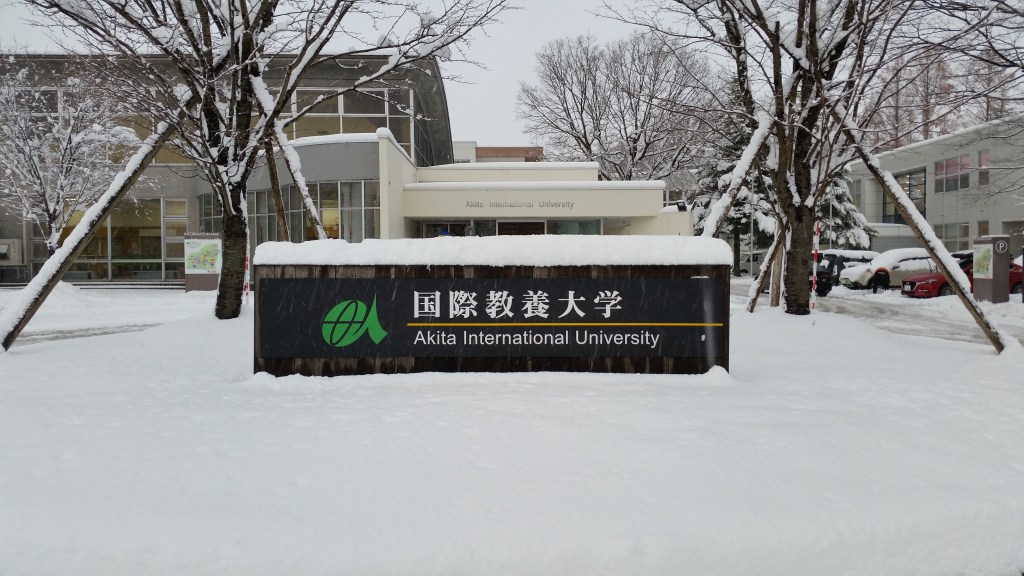
Home sweet home

I am back.

Due to the COVID-19 crisis. I decided to fly back home.

Now without the Olympic Games in this summer, the restrictions in Japan tightened up. New overseas tourists were not allowed to come to Japan and many hostels and hotels were temporary closed. Museums and other public buildings were closed and people should not leave the house and work if possible at home.

Nevertheless I felt relatively safe in Japan. All the bad news were coming from Europe. But I think that because of the few testings in Japan, the numbers of infected people were lower than they really were.

Back in Germany I could not easily meet all the people I haven´t seen so long. With time I went out for walks and invited close friends to join me. At the beginning it was strange to keep always 2 to 3 meters distance between us, but now it seems naturally. Compare to other states and countries we are happy to have the chance to even go out the house and see each other.

I hope we can soon all live as free as we were used to before Corona.

Home
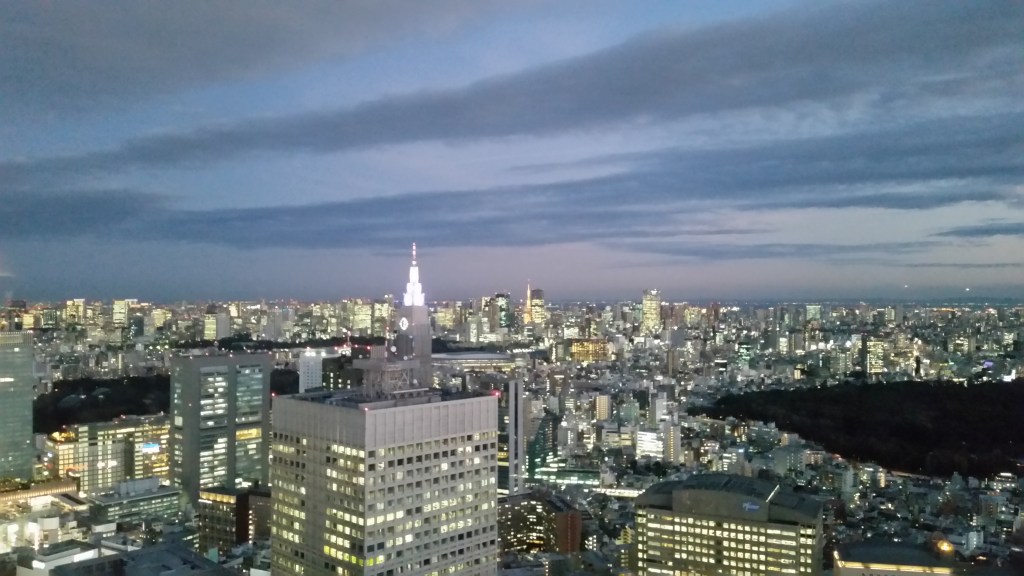
without seeing a city up to the horizon

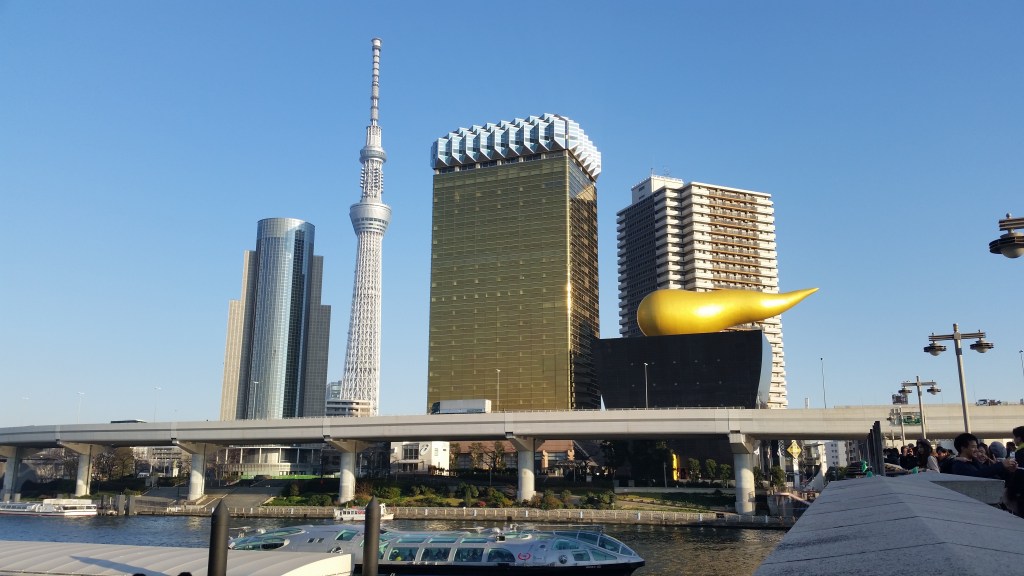
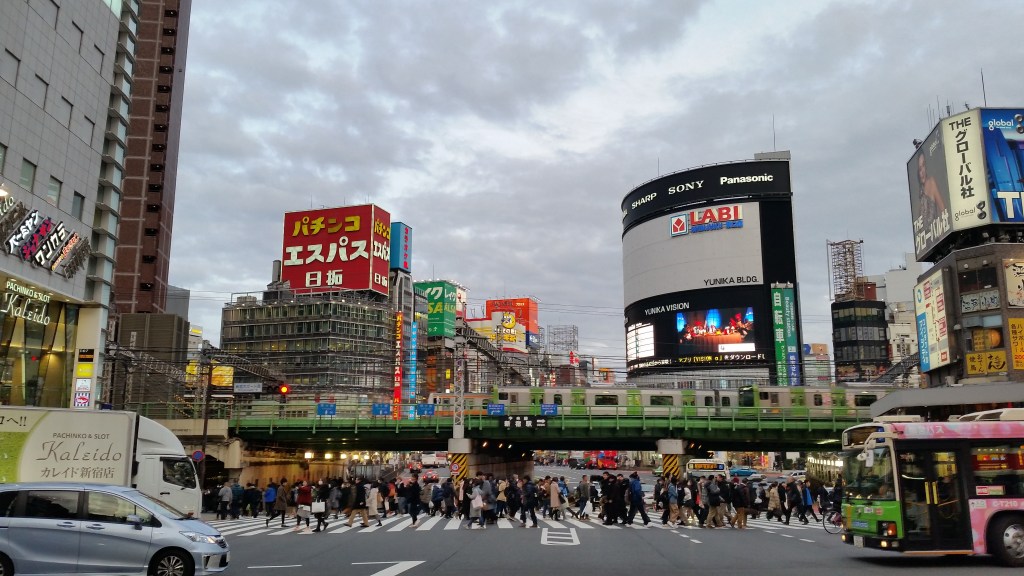
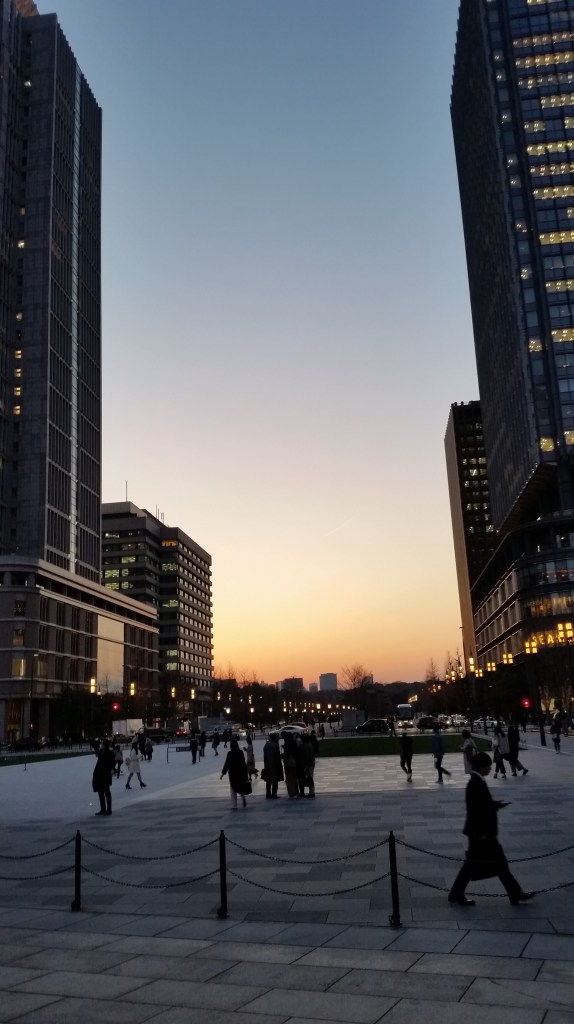
A day in Tokyo

Saturday 14th of March

A Workday

7:50 am – waking up and cycling to work and hope to survive

9 am – work starts

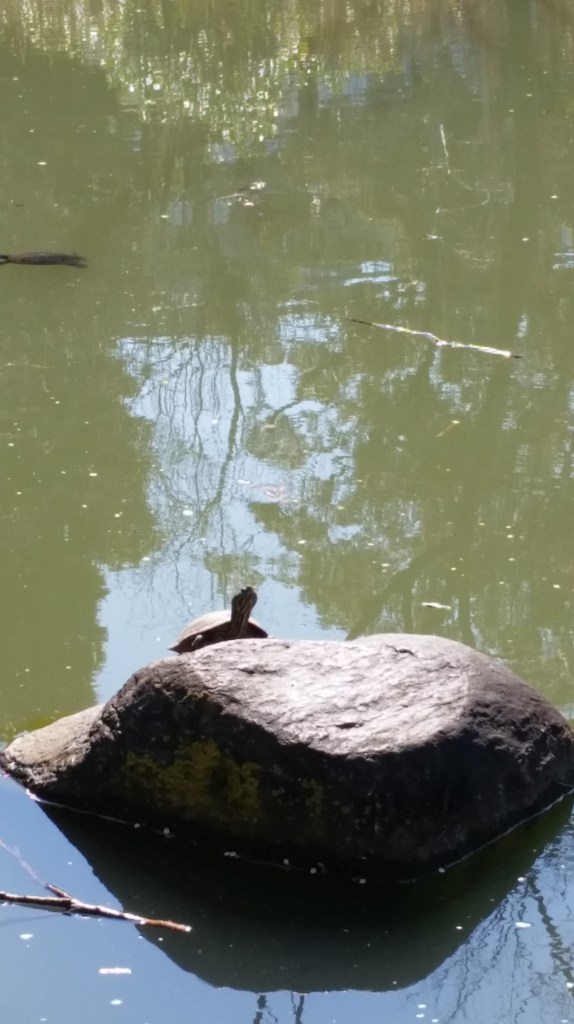
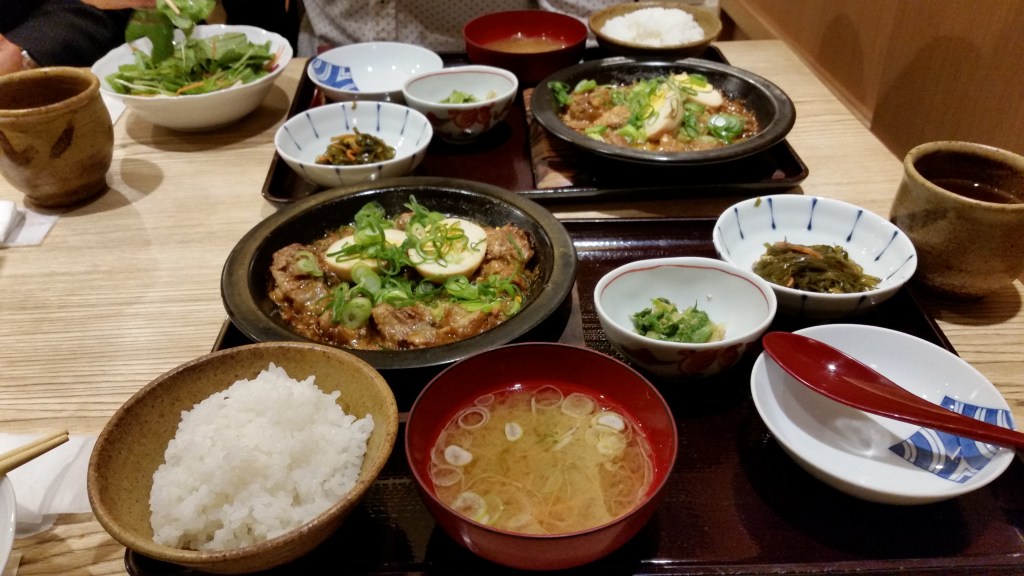
12 am – lunch break, I often go to the park nearby. I sit on a bench and watch two older men who are fishing in the small lake everyday. The lake also has turtles. If it is a rainy day I go to a restaurant with colleagues. The price is around 1.000 Yen = a little more than 8€ per meal.

5 pm – end of work. Afterwards, 2x a week, speaking German/ Japanese Tandem with a Japanese who wants to improve her German.

On Tuesdays 6:30 pm – playing football in the embassy

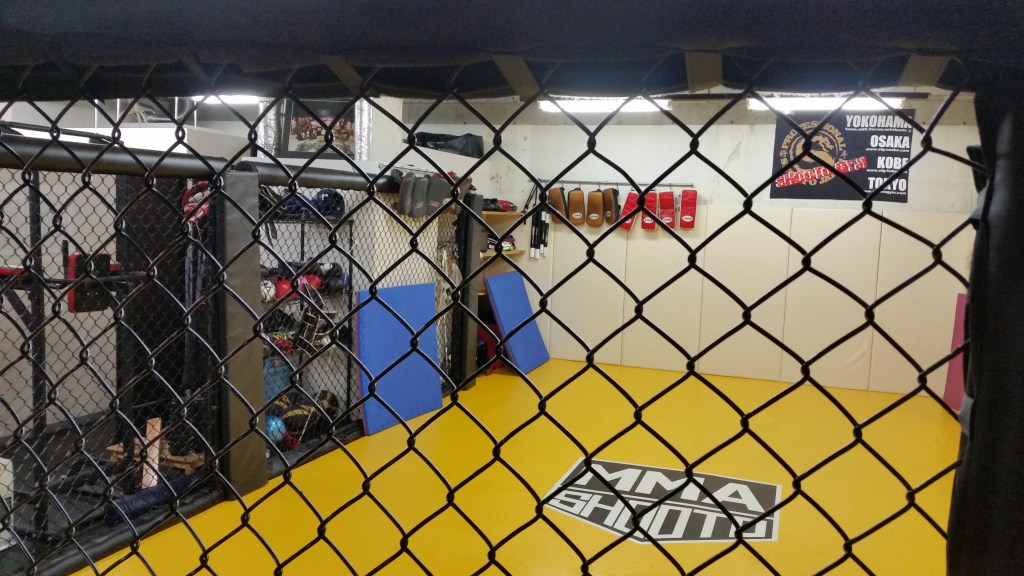
8 pm – going to the MMA gym or doing a workout on the playground – yeah creepy but the only place to do pull-ups nearby

10 pm – sitting together and having food with my other flatmates or relaxing in the onsen

weekend

recover and discovering new places in Tokyo and its surroundings, meet with Dan

03. Interview – かめちゃん= Ms. Turtle

Thanks to a friend, who helped me study Japanese, I were allowed to publish this interview about her life and thoughts about Japan.

November 2019

“I am born 1998 in Kyoto.

My first memory is being in a carriage with plastic cover and enjoying the rain. Another is placed bevor kindergarten. I was going out with my big sister. She had like the anime character とっとこはむたろう(=tottoko hamutarou) pink sandals, I had yellow ones.

My sister is three years older and born in 1995. We lived just 30 minutes away from our father’s parents. Also my turtle is considered as my brother. It is a huge turtle called Masu, because he came when I was 8 years old on Christmas to our house. I wrote in second grade of elementary school Santa Clause a letter. I wanted to have an animal, but I have an allergy towards animals like cats and dogs, so I wished for a turtle.

Kyoto is a very touristic place. I grew up in 嵐山 (= arashima = stone mountain). Near my house is Studio Park, which is a basically a samurai movie set by a film company. It is also called “Little japan Hollywood”.

My father works for Kyoto City. Before marriage my mother was a kindergarten teacher. My health was not good and my mother needed to stay at home to take care of me. In 3rd or 4th grade I was getting better. While staying at home my mom teached herself drawing. She went back to kindergarten but was quitting her job soon. Then she worked for a publisher company. She likes roses very much and also got a license to make Korean flower cake. Her hobby became her job and now she is an artist. Sometimes she models beautiful boxes for exhibitions in New York. My sister lives in Niigata prefecture which is below Akita and also snowy and famous for rice. She is working for a city and soon for a company. It is very rural place and is often getting vegetables from neighbors.

I liked animals very much but because of my allergy I had as a child a fluffy toy which could move on his own. I carried it everywhere. In 4th grade elementary school Santa Clause brought me a Nintendo DS with the game Nintendogs. My mum set very strict rules, I were allowed to just 15 minutes a day.”

“How was kindergarten?”

“My health was not good and I was smaller than the other kids. I was often treated as their little sister. My big sister on the other hand was taller than the most kids. The kindergarten is a Buddhism one and lies next to a shrine. There many different kinds of Buddhism, like protestant, catholic and orthodox. I was taught a new kind of Buddhism, old but new compared to the others. It was created 1175. In kindergarten we had a praying time in front of a Buddha statue every week. Japanese have no strict religion. My father’s side believed in another form of Buddhism as my mother’s side. I think my parents choose the kindergarten that I fit into the families praying style. Here in AIU, I have a stronger religious mind than others. I believe it has something to do with being raised in Kyoto. In kindergarten I was playing around with monks and also the city as a whole is an important historical center of Japan.

There were not many rich families where I grew up. Thanks to my parents and the kindergarten I was able to write Kanji[1] in elementary school, while other kids were struggling with Hiragana[2] and Katakana[3]. When you are different they will bully the kid. My family was different. My father is well educated and has a good job compared to the neighborhood. Academically I did well. I started playing piano as I was three years old. My mom had to learn the piano to become a kindergarten teacher. Once a week, many kids plus an outside teacher came to my house because my mother gave a room for piano practice. I didn’t like it. Moreover I did calligraphy, beautiful writing with a brush. From the first until the sixth grade of elementary school I did classical ballet. I was not very good but some of my friends are now in Europe earning money from dancing. Many people could not afford such hobbies as well. They saw that different girl, which led to bullying. It made me strong outside. In the neighborhood were a lot of single mums. The most of them had not a good job and they were working all the time.

My elementary school subjects were こくご (=kokugo= countries/ national language), math, until the 3rd grade seikatsu= living. Once we learned the history of our neighborhood. From 4th to 6th grade seikatsu changed to biology and shakai= social. Physical Education – I hated it, I was the smallest. Music – I liked it. I played piano, I was ahead of my classmates. Ethics, similar to a religion class. Maybe different from Europe is that we had every morning five to ten minutes to read books. Anything was ok, if it was not a comic.

From 7th to 9th grade, around age 12 to 15, I was in Junior High school. My school was not good. The yakuza (= Japanese Mafia) had strong influence in the neighborhood and towards the children. Teachers lost control in the classroom, tables were flying, violence between students which teachers couldn’t stop. That years were horrible. I could not study. I went to a private teacher. It is normal in Japan. In the last year of Junior High everybody goes to a private teacher because we have entrance exam tests for High schools. If you go to a good school you will get a good job. While studying a lot I could escape from my environment. I believe studying changed my life in a good way. I got into a High school without the kids from my neighborhood. The new school had a mandatory study abroad program. I was in Canada for one year. English starts from the first class in Junior High. I felt if I can speak English, I can speak to many people. High school was amazing, no violence, we needed to study for IELTS. It was hard. I choose to go to Canada, I was doing a good job in every class.

Canada was an amazing time. Until today I consider my host family as my second family. I visit them every two or three years. It was difficult in the beginning. I couldn’t speak English and no one could speak Japanese. My host family helped me a lot for speaking. They asked me always how my day was. It was a small fishermen village with around 500 inhabitants. In High School we were in total around one hundred kids. Everybody is related to everybody, everybody was inviting. I very liked it and it was a good experience to stay without parents.

The cultural difference was huge. People were saying stuff to get something. I was not used to say what I want. In Japan people sense it. To be different in Japanese society is dangerous, because Japanese like harmony. Everybody is happy on the surface and no one has strong or radical opinions. When everybody is throwing chairs – I had to do it as well – but I didn’t do it. I had bitter experiences, but I don’t blame it. We need to live happily and in harmony in this small country. In Edo period[4] the islands of Japan were like many small countries, isolated and no such thing as Japanese nation existed. Moreover, people identified themselves as regional identities. You can see this in Senshu Park where the castle from Akita’s warlords is. During the Meji-restauration the country opened up and the thinking of being a nation raise. I do not like the Japanese kind of harmony much, but it is something Japan needed to have. In Canada it was ok to be different. In the school I was the only Asian girl.

I really wanted to enter this university. The international setting and studying abroad would change my view and life. I did the entrance exam. An English test and an interview. They asked why I wanted to enter this university, asked about actual news in Japanese and English and which famous people I want to meet and why. The first time I failed. After I failed, I did the national a-level exam.[5] With the score from the test I could apply a second time in Akita International University. From the A, B, C entrance test I failed A and B. A was Japanese, English and something else like history, economics, politics and ethics. In my case it was economics. B was Japanese, English and mathematics or national science. C was again an English test. I applied for two other well known universities as insurance. どうししゃ(=doushisha) and かんさい(=kansei) university (=daigaku). I got into both, so I was in doushisha for one semester.

In summer 2016 I finally got into AIU. The 13th generation of this university. Students prefer to say generation rather than to say they are at the 5th semester. With the AIU exchange program, I went to Phillips Universität Marburg. I specifically want to go to Germany because during my time in Canada I meet an 18 years old German boy. He was the first one who was discriminating me about gender and race. In the night I was wondering what made him think this way and if it is a cultural German thing. I got interested. I told him that was discrimination. He had not realized that the way he acted was discriminating. He said thing like: Girls shouldn’t say something for men. He apologized and changed his behavior. Now he is a good friend of mine. Japan has big gender issues and the male has the dominant role in society. My family was also so. Against anybody who was older or my father I could not speak up.

I visited my German friend in Aachen, he studies now engineering. We went to the Christmas market and he bought me Kinderpunsch. He grew up in the suburbs of Düsseldorf. Not many foreigners lived there. In Canada he did not meant to discriminate me, but now he understands. It was also a good experience for me.

Germany is a good place, with good food. My boyfriend is German, I met him here in AIU. As we went together to Germany and I found it scary to hear him speak German. It sounded aggressive and the way to speak is more direct, also the opposite of Japanese. Many people helped me in Germany. For instance, one time I was charged a lot for a packet and I had not the correct amount of money to pay. A scary old person came to me exchanged my money in smaller money. They act scary, but what they do, or show after doing something is very warm.

I experienced also racism. On the street, from a car some men screamed something rude in Chinese. They wanted me to be angry or surprised. Some people changed their attitude completely when they find out my German is not good enough. Such people exist everywhere. From friends studying abroad I heard other part of Europe were worse. A friend of mine were robbed and there were more extreme cases of racism. It is more towards Chinese people. I know there are more nice than bad people in Germany.

In Japan, whenever my boyfriend and me were doing something, he is a tall German guy, all people were staring at him. I felt not Japanese anymore. They not try to do something bad, some are just not used to foreigner and do not know how to react. Nobody should feel uncomfortable. They try to be polite but not in a good way. If Japan wants harmony, they should not do this.

Around two years ago politics changed a law to accept more foreigner to work in Japan. But there is not enough support for language or to get to know the system. In 11th of March 2011 was a tsunami warning. At a factory a boss did not tell foreign worker to go away. Language barrier can literally kill people. At least they should try to get a few people to speak English.”

“What do you think about Japan having an emperor?”

 “I think it is ok to have one, I did not hear much discussion. My grandfather said the best time of his life was as the emperor looked in Kyoto into his eyes and waved his hand. The grandfather was the youngest of his brothers, which fought in World War II. Those people who died got a paper or a certificate that you died for your emperor. The tenno was a god. This certificate is still hanging at my grandmother’s place at the best spot in the house. In the tatami room   with the butsudan, a little temple where the ancestors are.

In history class we learned that Japan sent a letter to the US before attacking Pearl Harbor. But the ship was late, so it looks like a sudden attack without a motive. Sometimes I feel some guilt towards the countries we were cruel. Todays education does not tell so much about what Japan did to Asian countries. This has to change.

My dead grandfather experienced the atomic bombs and always prayed for the family he lost 1945 in Nagasaki. He hated the Americans for using the atomic bomb and never returned home afterwards. In general, our generation feels to be the victim in the war, not the aggressor. They should inform themselves better.

In Nagasaki and Hiroshima is a museum to tell what happened to the people effected by the atomic bombs. The whole museum is from the victim’s perspective and does not say much about the causes of the bomb. Compare to Germany I believe Japanese people feel less guilt about World War II.”

“What do you want to do in the future?”

“I need or want to get money to be able to do a master of culture studies in Germany. Especially I am interested in North America studies in Marburg, because I can study in English. Therefore, I have to go for jobhunting soon. If I could get a scholarship this would not be necessary. I basically need by law all the money I need for studies, 800 Euro a month, before I even come to Germany. This money I have to submit and afterwards I receive each month of studying 800 Euro from the “Sparkonto”. It will take some time to save the money but I really like to stay in Germany. For me it feels like a more open-minded society rather than the Japanese way of harmony, I have some negative thoughts about.”

“What is the most important thing in life?”

“To improve your time. Try to achieve something more than you can do. I tried to speak English when I could not speak it. I failed at AIU three times and here I am. I studied at a place where I could not study. – But do not die from stress! Dying from stress happens often in Japan. We have also an own word for it:

かろうし=karoshi=ka (too much), rou (work), shi (death).

The body dies if you do too much. Do not do too much!”


[1] Kanji: Mostly Chinese symbols: one symbol has often more than one meaning or pronunciation. Around 2.000 Kanji are used in daily life.

[2] Hirigana: Main alphabet with 46 characters.

[3] Katakana: Alphabet with 46 characters for foreign names and animal sounds.

[4] Edo period: 1603-1868

[5] Something like german Abitur.

(My) X-mas in Japan

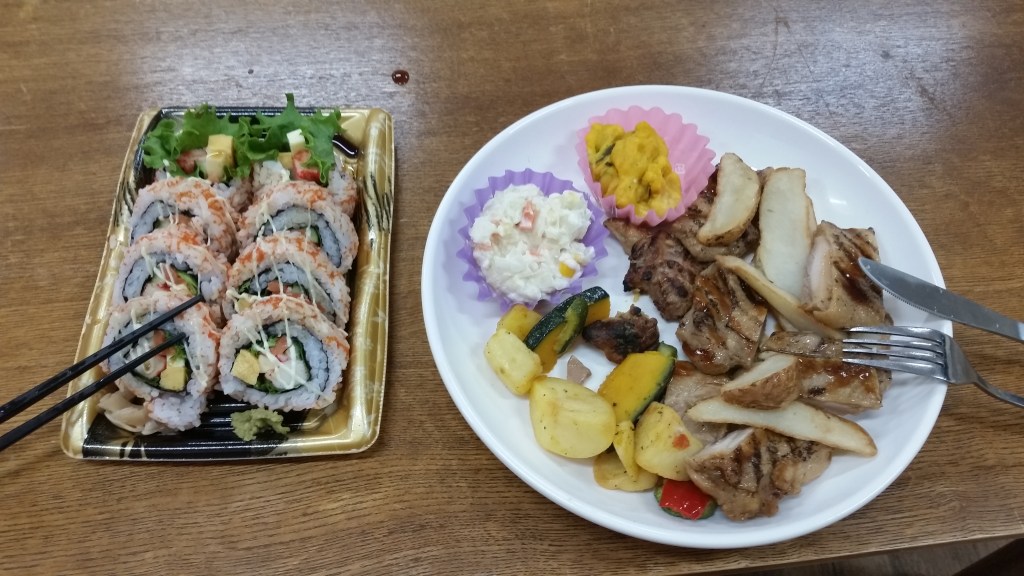
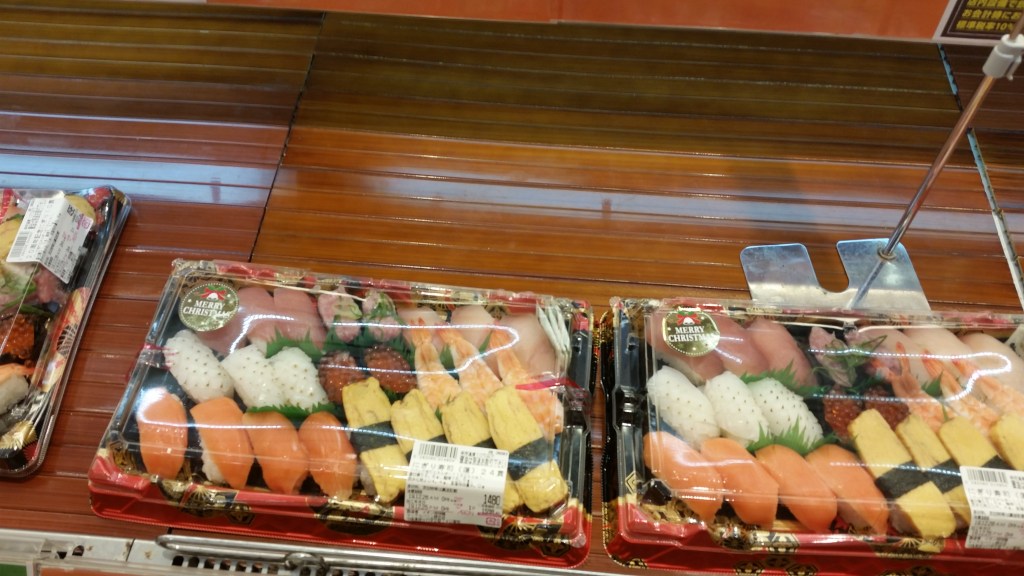
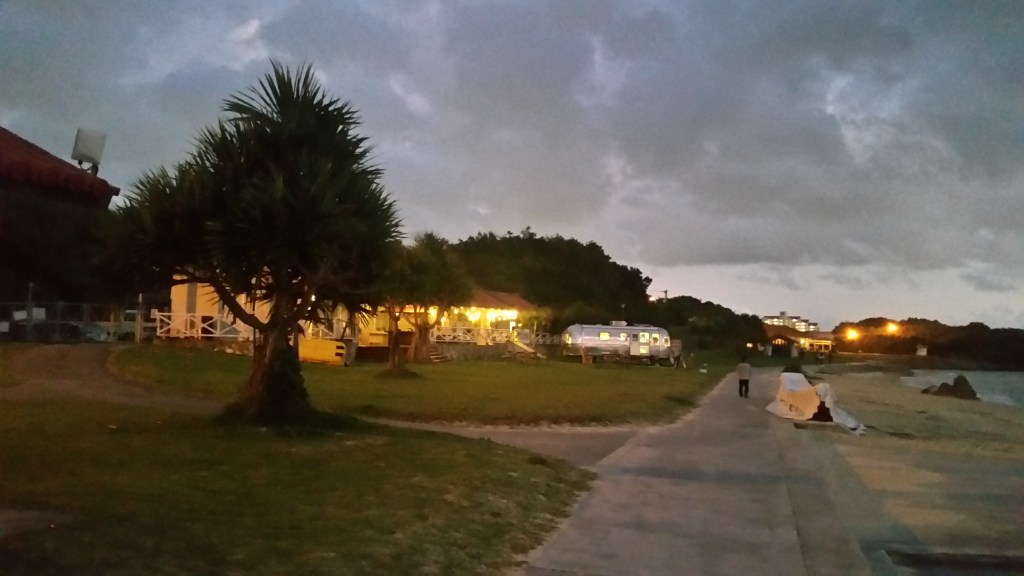
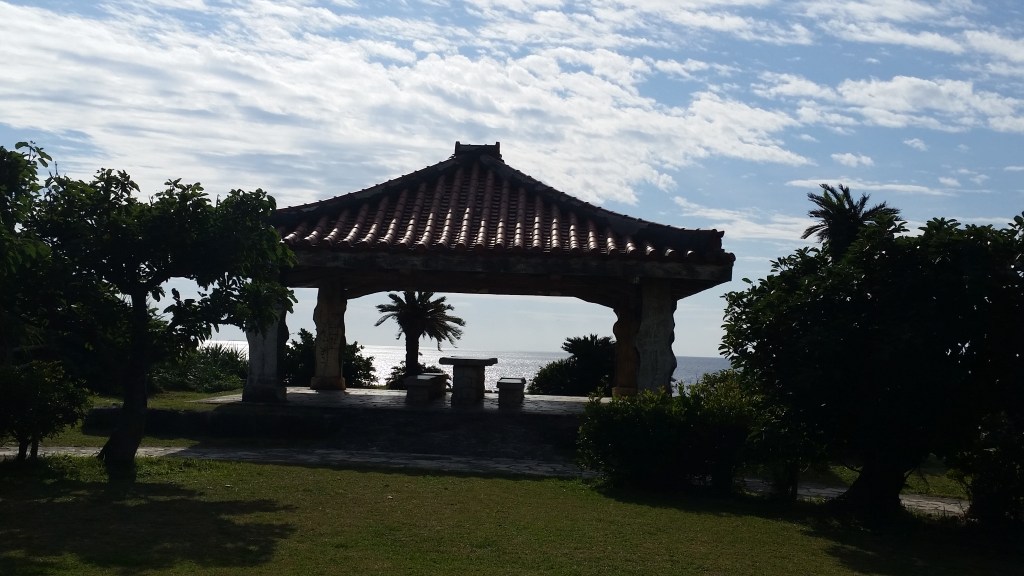
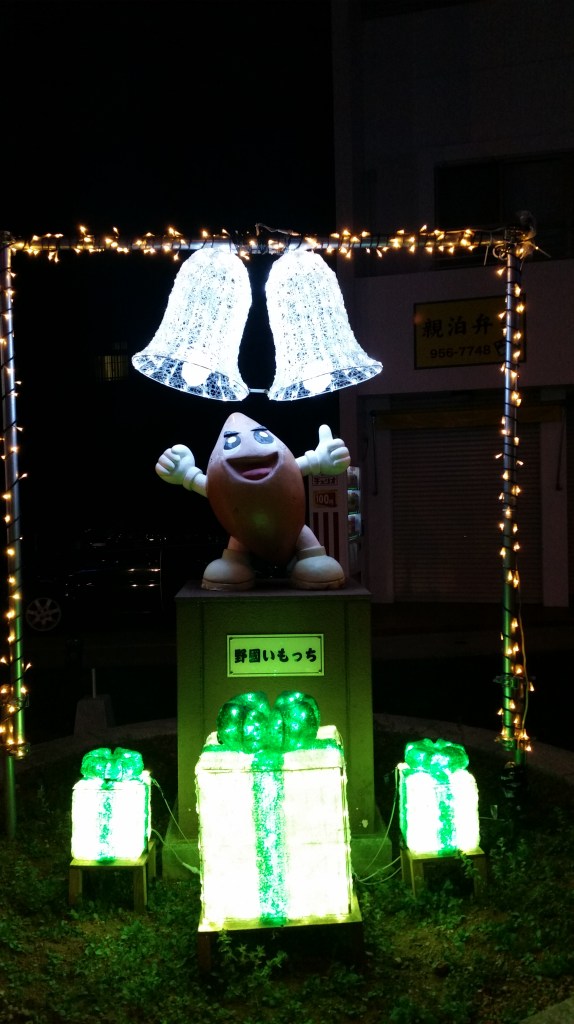
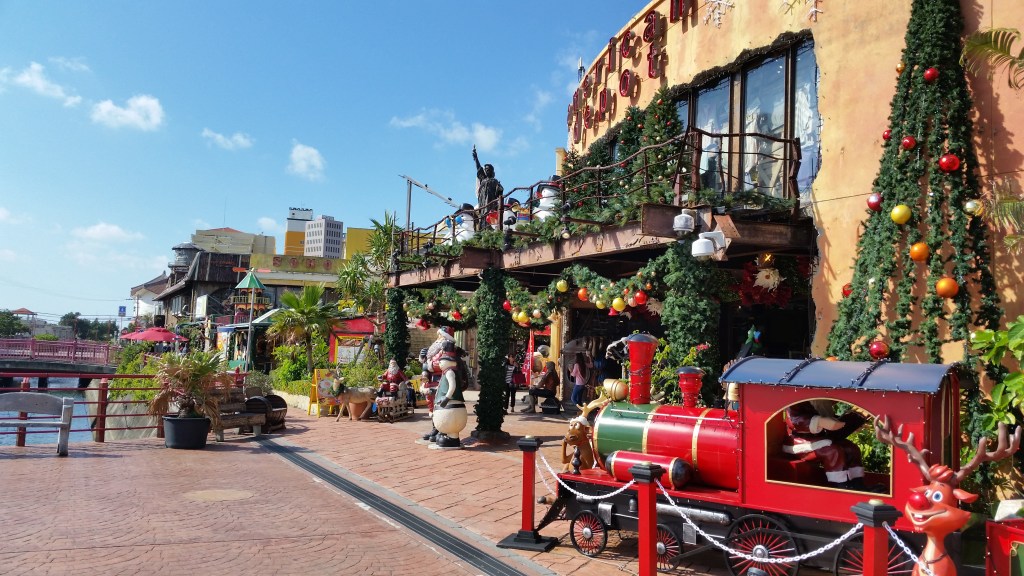
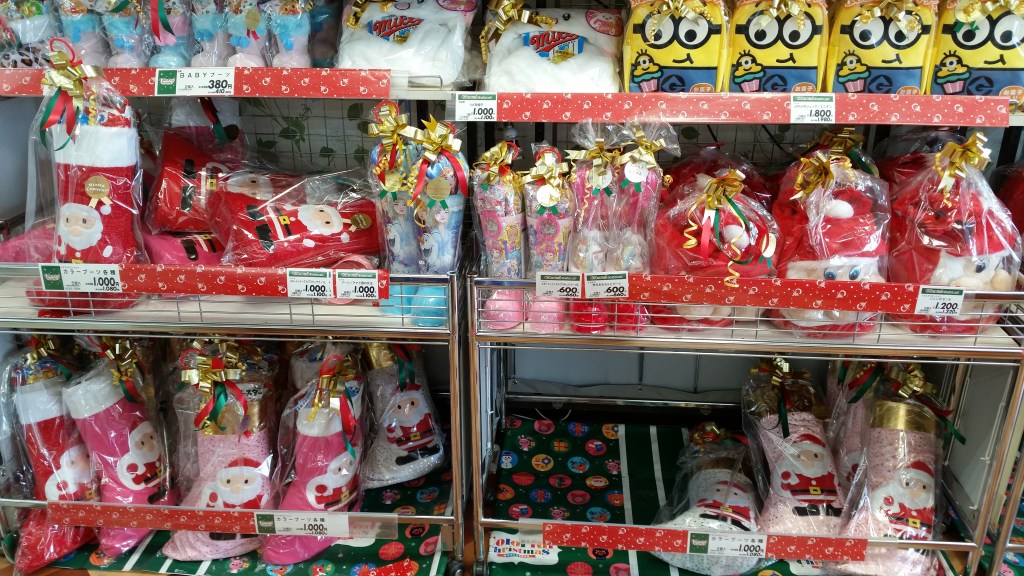
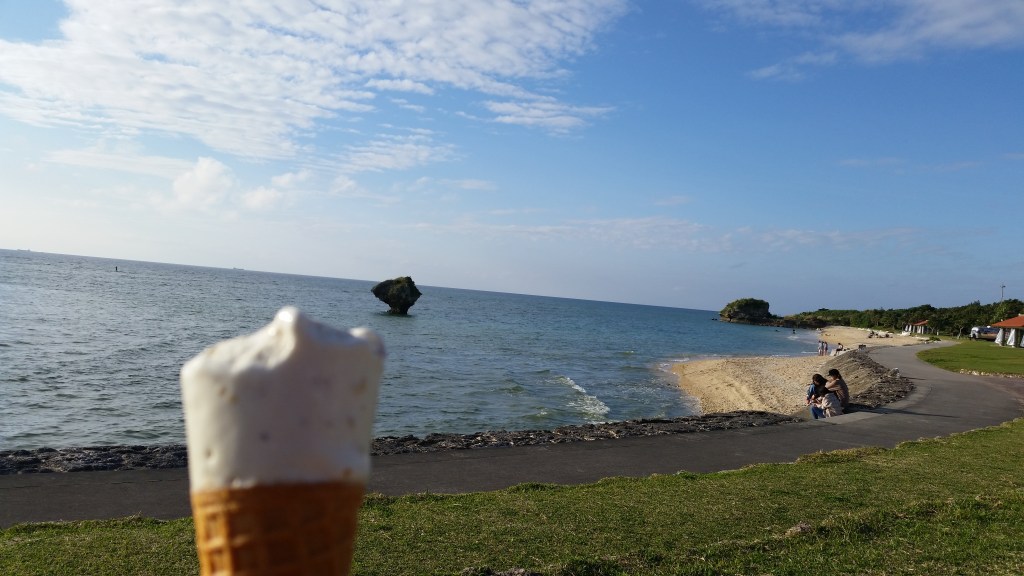
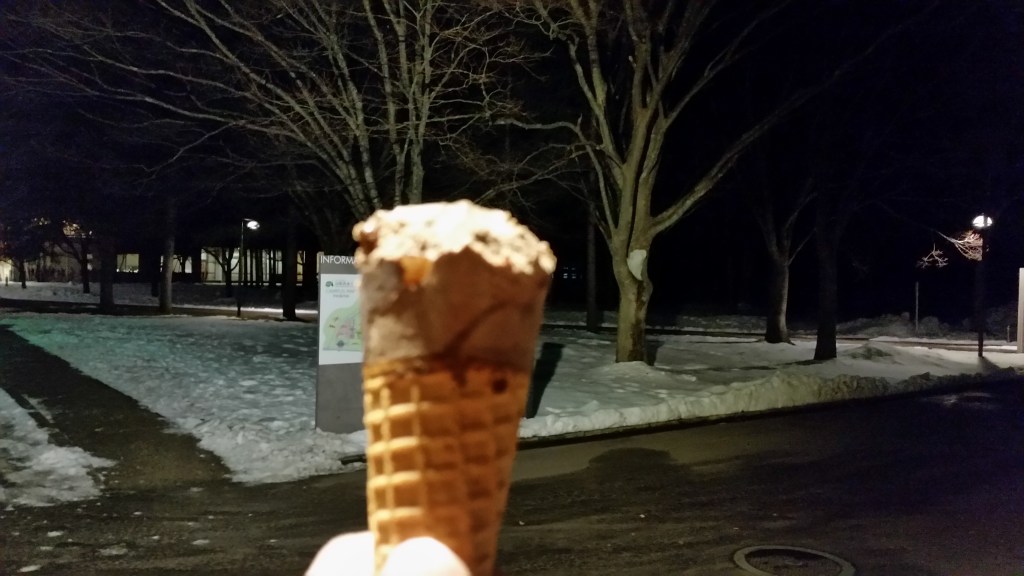
Adventsnow in Akita. Now, for holidays, I went to Okinawa (=Hawaii 2.0). Everywhere is cheap christmas stuff. Here christmas is like valentinesday. The boy gives his girl a present or/and goes with her to a restaurant. A lot of Japanese go on christmas to KFC. To the next KFC it would take a little bit time, so I ate Sushi, grilled chicken with potatoes as christmas-dinner. These christmas-holiday-days I spent with 23*C at the beach. Strange but great.

Interview 02 – My roommate

Thanks to my roommate I were allowed to publish this interview about his life and thoughts about Japan.

Tuesday, 17. September 2019

S. born in Nov. 2000 in Osaka, Japan.

“I am here at AIU (Akita International University) to have international interaction, speaking foreign languages and to go away from family to live alone. I want to live tough, to stand with two feet. It was my own decision to go so far away but my family agreed.

My father is chef in a hostel, my mother is a part time job worker. I have two older brothers. One is 20 years old and studies in Osaka. The other one is 24 years old and works in a hotel in Osaka.

My first memory is to open the door in the new house. We moved in a new house in Osaka. This image is like a dream but true.

In kindergarten I stayed three years. It was not a usual kindergarten. We had tiny cage with rabbits and turtles and learned how to take care of animals. The main point of kindergarten is to spend time playing with friends. We had ball games, running and adventure. We also had a language teacher in kindergarten and learned simple greetings. But kindergarten is not for studying, the interaction with friends is the most important thing. Kindergarten was from 9 am to 2 pm. I got there with bicycle or by foot with my mum. In total I had a happy childhood including my friends and sometimes fighting with my two brothers. My toys were video games like the Nitendo DS. I played Dragon Quest and Pokemonster. In Osaka there are a lot of parks to play soccer or just being outside.

With the age of 6, which is the normal age in Japan, I visited elementary school. There were a lot of new things. My subjects were Japanese, mathematics, physical exercise, ethics and science. Ethics is about some basic understanding about moral, why is something good or bad. My favorite subject was science. We observed tiny creatures, used the microscope and had some small experiments.

I didn’t travel much. My both parents were busy with work and had simply not enough time to do trips. One trip I remember was to 三重県 (mie prefecture). It is next to Osaka. On this family trip I was 10. We visited a shrine and a theme park with a Spain-village. It was fun.

With one brother and my mother I visited Hiroshima prefecture. I was interested in playing GO. There is one island which is famous for GO-players because there lived in ancient times a well known GO-player. We also visited a museum and I played with my brother. At home eating together was most of the time not possible. I ate sometimes just with my brother or mother or alone.

From the age of 12 to 15 I visited the Junior High school. There I was member of the Shogi and GO club. I played a lot of Shogi. You have to use the mind to win the game. Chess was not so famous but there was also a chess club. In music class I played harmonica, guitar and Kotto, a traditional instrument. In Junior High I studied for entering high level High School. There is a hierarchy of High Schools in Japan. Low level High Schools lead normally directly to a job and with being in high level High School you can get into a high level University.

In my free time I liked watching Anime and Japanese comedy. I liked playing with friends, it is not common in Japan to stay overnight. We went shopping or went eating out to Mc Donald’s, “I’m lovin’ it”. In game-centers we played often car races or shooting games. There were also Jump comics. It is a magazine with one chapter of several manga’s in it. They are published weekly. Thereupon, if you want to have the whole story you have to get them weekly.

It is a Japanese tendency to take advantages of different religions. My parents are not religious but for example in funeral we do it like in Buddhism, for marriage we go to church and at New Year we celebrate New Year. For Matsuri, which literally means “admiring the god”, we go to a shrine near my house. In Shinto everything has a god. There is a god in the pen, even in your smart phone. Everything has its own god. At the shrine were many food stamps so we just enjoyed the festival and the eating even if we are not so related to religions. Hanami, watching cherry blossoms is also famous in Japan. Birthdays we celebrate like western countries with a cake and candles. The number of the candles are matching the age.”

I asked him about Japanese history and politics:

“I am not a specialist. We have around 40-50 ministers. The political system was bad. Some ministers were cheating or were involved in criminal activities. Not all were super good persons. If such people are in the system it does not work well. I think in European countries the Emperors have or had the power. The Japanese Emperor is a symbol of Japan – which is the first article in the constitution. Emperors are not so different from our aura, they are just human as well. Some people say it is a waste of money, others say is shows Japan since ancient times, even if they have no power. It totally depends on people.

To Junior High school I had to go by train. I saw a lot of foreigners but I didn’t talk to them because they were strangers.

High School I attended from 16 to 18. It was a missionary one founded by Christians. I joined science club and studied harder. There was a foreigner from Germany. I had interaction with him in English. The school rules were very strict, so it is not common to drink under age (20 years) or to smoke marijuana. At least there is no information at all where to buy it.

Here in Akita International University I joined the Rock Band club because I like the guitar. Music is part of my life and now I am in a Heavy Metal Band. We play on Sunday 9:50pm in student hall. I am also in the AIU festival committee. There was no purpose for entering, I just want to be a part, a member and create an enjoyable festival. It is mandatory for AIU students to study abroad. I want to study somewhere in Europe where it has warm temperature and is next to the sea. I do not like the cold as we have it here in Akita.”

After graduation what will you do?

“Ahhm I will… it’s unclear, but international interaction, communication, travel abroad to see several beautiful places. By the time I die I will have visited Greece, Venice, some areas I have never seen.”

Why do you want to travel?

“I have not much experience. My parents have three children and not so much time etc. “

Which part of the Japanese history do you like at most?

“Sengoku Jidai period. There were many samurai, famous words and interesting stories. It was a lot about strategy how to win the battle.”

What do you think about World War II?

“We Japanese thought we are stronger than any other, but people realized how tiny Japan was. During the World War Japan had developed dramatically commercial and in spirit, mind. In that time people had to spend though and poor life. There was not enough food, they were though according to survive somehow. Today Japanese teenager are not tough because there is everything today.”

 Why do you want to live tougher?

“Japan has natural disasters and is surrounded by sea. Japan is affected from four part of plates which causes earthquakes. 2011 a massive Tsunami from the Pacific Ocean hit Tohoku region. Some parts have radioactivity. All this cause health damage. Japan is vulnerable. We can’t live without other people. But if I have skills to clean water or generate electricity by hand we can live longer. I know a guy he moved from Tokyo to Akita. After the experience with Tohoku earthquake he lives here cultivating rice fields and vegetables by himself. I think it is a good way to live longer. I love useful life with technology but at the same time survival skills are important to life.”

Do you think there was a similar effect according showing flags in Japan after World War II like in Germany?

“If people have the Japanese flag people tend to think they are in the right wing. Such bad times. They are related to war people think so. But most people don’t feel any guilty about World War II. Maybe there is no meaning at all in having a flag today.”

Do you think Japan started the war?

“The very first act of WWII in the pacific start from Japan with Pearl Harbor. I learned it in history. Today in the Japanese constitution we cannot start war from ourselves. But we have to protect. The self-defense-force in Japan is very very strong. It is like a military, a strong influence.”

Do you think it was right to attack Pearl Harbor?

 “It was series at the time. If you attack you have to send information. So it was out of rules of international criteria. But if Japan had send a notification, Japan couldn’t attack so.”

What do you think about the A-bombs?

“It was a very important lesson to the earth how dangerous this bombs are. Nevertheless some countries still have them. Japan is the only country were such bombs have dropped. It shows a lesson.”

Do you think the A-bombs were necessary to end the war?

“The ideal way were to have communication. To talk to each other and stop at one point. But it is ideal. The reality is far from the ideal. America didn’t had to drop the bombs, they could win without.”

Are you proud to be a Japanese?

“Yes.” Why? “I think it is a miracle after World War II there was nothing. Now we are Number 2 of GDP because of spirit and mind of Japanese people passion to go further. Even in disasters they did go on and developed Japan.”

How is Japan? How would you describe it to someone who is unfamiliar with the country?

“Ehh… … hm Japan. Maybe -unique- is one of the abstract words you can use. Most people are Japanese people only. In Germany are many immigrants, are mixed many ethnic groups. In Japan the total number of people is around 120 million. In such a tiny land the most of them are Japanese. The land is surrounded by sea. Japanese are hard worker. In the developing progress they worked really hard. Through their contribution Japan has become how it is. It is dangerous that Japan is being Americanized. Heritages are lost by such monopolization. We have to protect tradition in Japan. Good things should be protected for a long time or forever.”

How would you describe Japanese culture?

“Some of Japanese culture are from China or India. Japan developed in an own style so the Japanese can feel comfortable with it.”

Is hierarchy part of it?

“It is important and necessary, it is a culture of Japan. It also has good aspects like hmm… I don’t know how good it is, but we are raised in hierarchical society, so we feel comfortable with it. I want to have an objective point – So what do you think Martin about hierarchical structure in Japan.” One hand I admire it how respectful people are to each other. In western societies we have a lack of respect. One the other side it must be hard for people who are on the lower hierarchical order.

Do you want to marry?

“Yes in the future. If not I could feel lonely.” Describe your ideal partner. “Ehhm make me delicious meal. I also like to cook, I want to be also chief in the family. I also think I want a wife with whom I feel happy whatever happens. It doesn’t matter if she is from Japan. Someone with whom I can communicate in verbal message. I started Russian.”

What is important in a good and healthy marriage?

“To be together and having communication.”

Do you want children?

“I have no idea now. I want to have a meaningful life. Maybe with children I have stress. There are negative and positive aspects. I have no idea, maybe, it depends on my future wife.”

Having a girlfriend in Japan?

“It could feel like pre-marriage.”

Do you feel a clash between modernization and tradition in Japan?

“In Akita it is very rural. In Tokyo is no such place. IT-companies try to go to rural areas. The Youth can therefore work also in rural areas if there is network or wifi. Employees can have a more stress less life. In urban areas they are more stressed and also the air is bad. They try that the employees stay healthy even if they are working on the computer.”

What do you think is the most important thing in life?

“Many things. Hmmmmmmmm. One: Be healthy – my life is far from healthy at the moment, but I try to be healthy. Two: Making every experience meaningful.” How? “The way of thinking. Positive thinking. In failure you think it positively and learn from it even if it’s embarrassing.”

Is there anything you want to add?

“Yeah that’s ok for now.… Martin why do you do this interview?” To learn more about the country and people. “That’s great! If you want I can introduce you to some more Japanese people that you have a more diverse view.”

Which topics would interest you in further interviews?
Oga’s problem

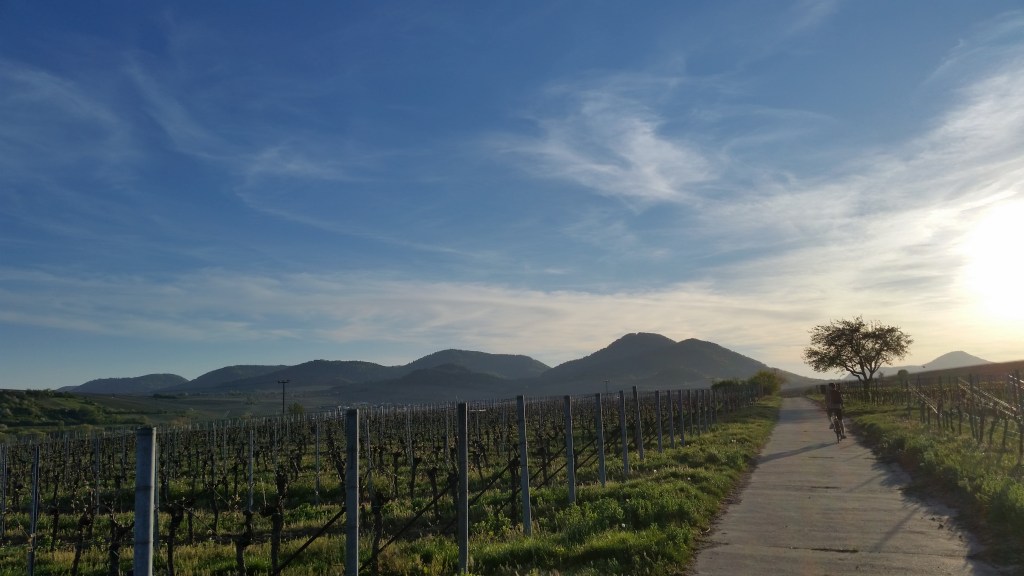
Die schoene Halbinsel Oga ist nicht weit von der Akita International University entfernt. Da jeder Kurs zwei fieldtrips pro Semester anbieten darf, waren wir mit Tourism-Kurs auf Oga. Unser Kurs Ziel ist es Strategien fuer nachhaltigen Tourismus zu entwickeln. Ein grosses Problem dabei ist, dass die Interessensgruppen nicht wirklich miteinander reden und es viele unausgesprochene Regeln und Braeuche gibt. Vor allem die international students haben das Gefuehl, dass sie noch so gute Ideen praesentieren koennen, doch damit wirkungslos an starren Strukturen abprallen. Auch hatten wir das Gefuehl, dass die lokalen Vertreter unseren Fragen oft ausgewichen sind…

Ein seltsames Kuriosum in Oga sind zudem die taiwanesischen Touristen. Diese machen 80-90% aller Uebernachtungen im Jahr aus. Warum ausgerechnet Taiwanesen Oga so attraktiv finden weiss niemand so genau.

Findings to promote Oga tourism 02. Oktober 2019

Of all following ideas the local people should be involved. One possible way would be through an annual meeting where people can present ideas and afterwards vote for or against them.

The most important factor for promoting something is information. The easiest way is social media (Twitter, Facebook, YouTube…).

Before their presentation the two speakers gave us a bag with many flyers which are for promoting Oga tourism. One third of them were useful and contained: the activity, a map/location, the time and the price. The local government or private stakeholders could ask JREast to put multilingual flyers with QR-codes into some Shinkansen and/or other trains to get attention. Seeing as Oga’s tourist population are from China/ Taiwan leaving more promotion in those languages would be valuable. Promoting in Japanese, Chinese and English would be a first step to help to bring more tourism.

  • The hotel manager wants to attract individual and diverging tourist. One idea we thought of was building a campsite not far from the sea. It should be connected with public transportation services and a convenience-store should not be so far away either. There is already a camping site[1] however, it is hard to get information, because there is no cost overview and the contact information is only in Japanese. The campsite could be a good alternative to the expensive hotels.
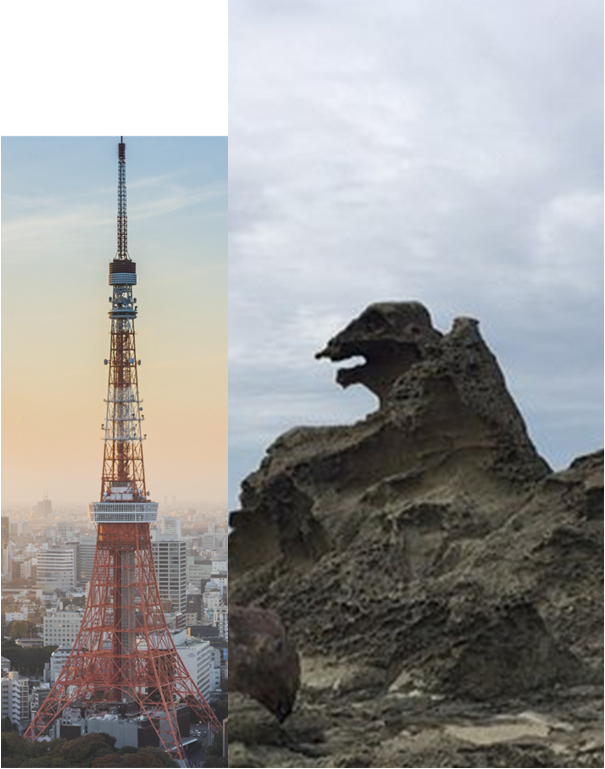
  • Oga is lacking of tourists in summer. A potential exciting idea for tourist could be to build a Tokyo Tower model in front of Godzilla rock to make the rock even more famous. Moreover, there could be open air Godzilla-movie-cinema offered in English with Japanese subtitles next to the Godzilla-rock.

Example picture:

  • Namahage-dinner-cruise

It is semi-formal with relaxing (traditional) music including a Namahage performance. Having dinner on a boat is very famous in the United States and in Europe. It takes around 3 hours. Local but also vegetarian food should be served!

  • YOga = doing yoga at a nice spot in Oga.

A final idea but I do not know if it is feasible is something like a Namahage Trademark or Copyright. People outside of Oga would have to pay a small fee if they do Namahage for commercial usage. So it stays famous but exclusive to Oga and would also satisfy local community who wants to preserve Namahage tradition.


[1] https://www.ogata.or.jp/sightseeing/park.html 30.09.2019.

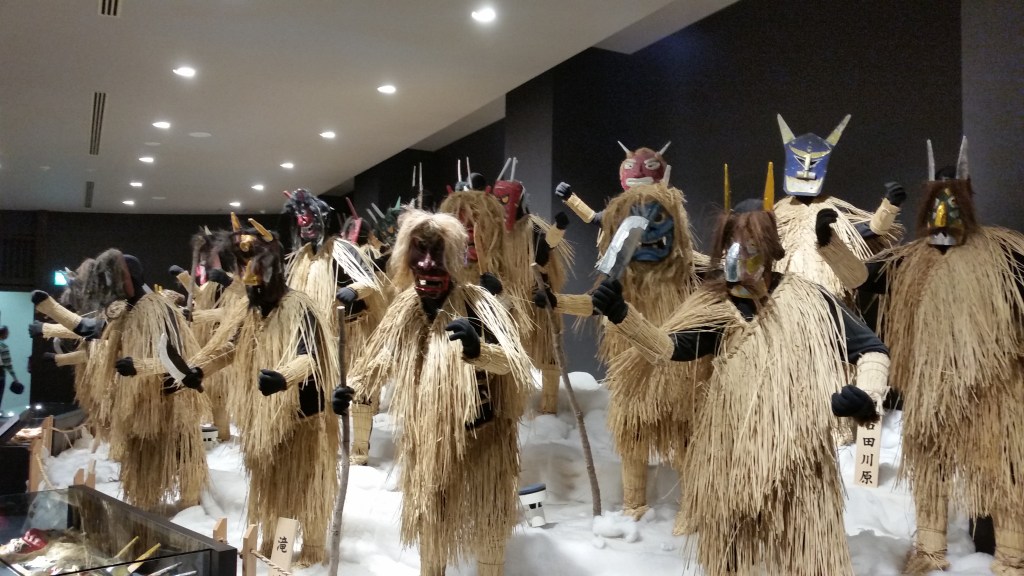
Oga’s Namahage. Ein lokaler Daemon vergleichbar mir Knecht Ruprecht. Namahage Performer erschrecken an Neujahr Kinder um diese zu guten Verhalten zu bewegen.
Ich bin mir nicht sicher ob ein traumatisches Erlebnis eine gute Erziehungsmassnahme ist.