Thanks to a friend, who helped me study Japanese, I were allowed to publish this interview about her life and thoughts about Japan.
November 2019
“I am born 1998 in Kyoto.
My first memory is being in a carriage with plastic cover and enjoying the rain. Another is placed bevor kindergarten. I was going out with my big sister. She had like the anime character とっとこはむたろう(=tottoko hamutarou) pink sandals, I had yellow ones.
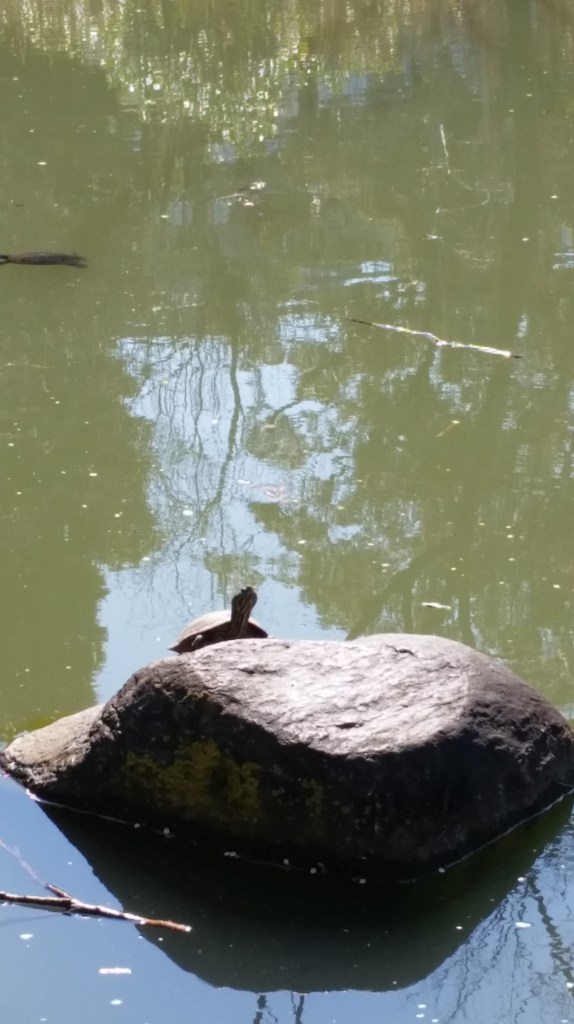
My sister is three years older and born in 1995. We lived just 30 minutes away from our father’s parents. Also my turtle is considered as my brother. It is a huge turtle called Masu, because he came when I was 8 years old on Christmas to our house. I wrote in second grade of elementary school Santa Clause a letter. I wanted to have an animal, but I have an allergy towards animals like cats and dogs, so I wished for a turtle.
Kyoto is a very touristic place. I grew up in 嵐山 (= arashima = stone mountain). Near my house is Studio Park, which is a basically a samurai movie set by a film company. It is also called “Little japan Hollywood”.
My father works for Kyoto City. Before marriage my mother was a kindergarten teacher. My health was not good and my mother needed to stay at home to take care of me. In 3rd or 4th grade I was getting better. While staying at home my mom teached herself drawing. She went back to kindergarten but was quitting her job soon. Then she worked for a publisher company. She likes roses very much and also got a license to make Korean flower cake. Her hobby became her job and now she is an artist. Sometimes she models beautiful boxes for exhibitions in New York. My sister lives in Niigata prefecture which is below Akita and also snowy and famous for rice. She is working for a city and soon for a company. It is very rural place and is often getting vegetables from neighbors.
I liked animals very much but because of my allergy I had as a child a fluffy toy which could move on his own. I carried it everywhere. In 4th grade elementary school Santa Clause brought me a Nintendo DS with the game Nintendogs. My mum set very strict rules, I were allowed to just 15 minutes a day.”
“How was kindergarten?”
“My health was not good and I was smaller than the other kids. I was often treated as their little sister. My big sister on the other hand was taller than the most kids. The kindergarten is a Buddhism one and lies next to a shrine. There many different kinds of Buddhism, like protestant, catholic and orthodox. I was taught a new kind of Buddhism, old but new compared to the others. It was created 1175. In kindergarten we had a praying time in front of a Buddha statue every week. Japanese have no strict religion. My father’s side believed in another form of Buddhism as my mother’s side. I think my parents choose the kindergarten that I fit into the families praying style. Here in AIU, I have a stronger religious mind than others. I believe it has something to do with being raised in Kyoto. In kindergarten I was playing around with monks and also the city as a whole is an important historical center of Japan.
There were not many rich families where I grew up. Thanks to my parents and the kindergarten I was able to write Kanji[1] in elementary school, while other kids were struggling with Hiragana[2] and Katakana[3]. When you are different they will bully the kid. My family was different. My father is well educated and has a good job compared to the neighborhood. Academically I did well. I started playing piano as I was three years old. My mom had to learn the piano to become a kindergarten teacher. Once a week, many kids plus an outside teacher came to my house because my mother gave a room for piano practice. I didn’t like it. Moreover I did calligraphy, beautiful writing with a brush. From the first until the sixth grade of elementary school I did classical ballet. I was not very good but some of my friends are now in Europe earning money from dancing. Many people could not afford such hobbies as well. They saw that different girl, which led to bullying. It made me strong outside. In the neighborhood were a lot of single mums. The most of them had not a good job and they were working all the time.
My elementary school subjects were こくご (=kokugo= countries/ national language), math, until the 3rd grade seikatsu= living. Once we learned the history of our neighborhood. From 4th to 6th grade seikatsu changed to biology and shakai= social. Physical Education – I hated it, I was the smallest. Music – I liked it. I played piano, I was ahead of my classmates. Ethics, similar to a religion class. Maybe different from Europe is that we had every morning five to ten minutes to read books. Anything was ok, if it was not a comic.
From 7th to 9th grade, around age 12 to 15, I was in Junior High school. My school was not good. The yakuza (= Japanese Mafia) had strong influence in the neighborhood and towards the children. Teachers lost control in the classroom, tables were flying, violence between students which teachers couldn’t stop. That years were horrible. I could not study. I went to a private teacher. It is normal in Japan. In the last year of Junior High everybody goes to a private teacher because we have entrance exam tests for High schools. If you go to a good school you will get a good job. While studying a lot I could escape from my environment. I believe studying changed my life in a good way. I got into a High school without the kids from my neighborhood. The new school had a mandatory study abroad program. I was in Canada for one year. English starts from the first class in Junior High. I felt if I can speak English, I can speak to many people. High school was amazing, no violence, we needed to study for IELTS. It was hard. I choose to go to Canada, I was doing a good job in every class.
Canada was an amazing time. Until today I consider my host family as my second family. I visit them every two or three years. It was difficult in the beginning. I couldn’t speak English and no one could speak Japanese. My host family helped me a lot for speaking. They asked me always how my day was. It was a small fishermen village with around 500 inhabitants. In High School we were in total around one hundred kids. Everybody is related to everybody, everybody was inviting. I very liked it and it was a good experience to stay without parents.
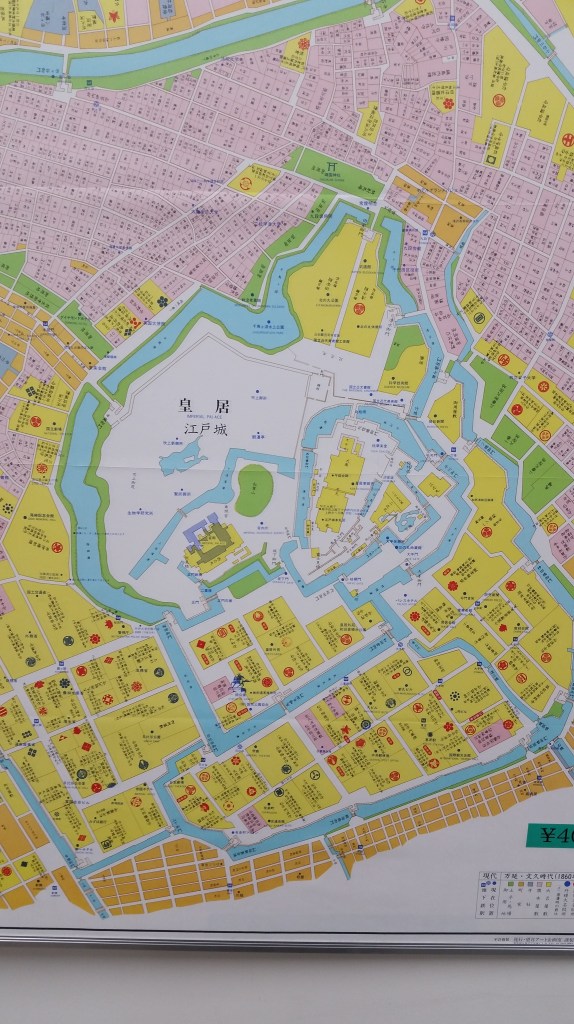
The cultural difference was huge. People were saying stuff to get something. I was not used to say what I want. In Japan people sense it. To be different in Japanese society is dangerous, because Japanese like harmony. Everybody is happy on the surface and no one has strong or radical opinions. When everybody is throwing chairs – I had to do it as well – but I didn’t do it. I had bitter experiences, but I don’t blame it. We need to live happily and in harmony in this small country. In Edo period[4] the islands of Japan were like many small countries, isolated and no such thing as Japanese nation existed. Moreover, people identified themselves as regional identities. You can see this in Senshu Park where the castle from Akita’s warlords is. During the Meji-restauration the country opened up and the thinking of being a nation raise. I do not like the Japanese kind of harmony much, but it is something Japan needed to have. In Canada it was ok to be different. In the school I was the only Asian girl.
I really wanted to enter this university. The international setting and studying abroad would change my view and life. I did the entrance exam. An English test and an interview. They asked why I wanted to enter this university, asked about actual news in Japanese and English and which famous people I want to meet and why. The first time I failed. After I failed, I did the national a-level exam.[5] With the score from the test I could apply a second time in Akita International University. From the A, B, C entrance test I failed A and B. A was Japanese, English and something else like history, economics, politics and ethics. In my case it was economics. B was Japanese, English and mathematics or national science. C was again an English test. I applied for two other well known universities as insurance. どうししゃ(=doushisha) and かんさい(=kansei) university (=daigaku). I got into both, so I was in doushisha for one semester.
In summer 2016 I finally got into AIU. The 13th generation of this university. Students prefer to say generation rather than to say they are at the 5th semester. With the AIU exchange program, I went to Phillips Universität Marburg. I specifically want to go to Germany because during my time in Canada I meet an 18 years old German boy. He was the first one who was discriminating me about gender and race. In the night I was wondering what made him think this way and if it is a cultural German thing. I got interested. I told him that was discrimination. He had not realized that the way he acted was discriminating. He said thing like: Girls shouldn’t say something for men. He apologized and changed his behavior. Now he is a good friend of mine. Japan has big gender issues and the male has the dominant role in society. My family was also so. Against anybody who was older or my father I could not speak up.
I visited my German friend in Aachen, he studies now engineering. We went to the Christmas market and he bought me Kinderpunsch. He grew up in the suburbs of Düsseldorf. Not many foreigners lived there. In Canada he did not meant to discriminate me, but now he understands. It was also a good experience for me.
Germany is a good place, with good food. My boyfriend is German, I met him here in AIU. As we went together to Germany and I found it scary to hear him speak German. It sounded aggressive and the way to speak is more direct, also the opposite of Japanese. Many people helped me in Germany. For instance, one time I was charged a lot for a packet and I had not the correct amount of money to pay. A scary old person came to me exchanged my money in smaller money. They act scary, but what they do, or show after doing something is very warm.
I experienced also racism. On the street, from a car some men screamed something rude in Chinese. They wanted me to be angry or surprised. Some people changed their attitude completely when they find out my German is not good enough. Such people exist everywhere. From friends studying abroad I heard other part of Europe were worse. A friend of mine were robbed and there were more extreme cases of racism. It is more towards Chinese people. I know there are more nice than bad people in Germany.
In Japan, whenever my boyfriend and me were doing something, he is a tall German guy, all people were staring at him. I felt not Japanese anymore. They not try to do something bad, some are just not used to foreigner and do not know how to react. Nobody should feel uncomfortable. They try to be polite but not in a good way. If Japan wants harmony, they should not do this.
Around two years ago politics changed a law to accept more foreigner to work in Japan. But there is not enough support for language or to get to know the system. In 11th of March 2011 was a tsunami warning. At a factory a boss did not tell foreign worker to go away. Language barrier can literally kill people. At least they should try to get a few people to speak English.”
“What do you think about Japan having an emperor?”
“I think it is ok to have one, I did not hear much discussion. My grandfather said the best time of his life was as the emperor looked in Kyoto into his eyes and waved his hand. The grandfather was the youngest of his brothers, which fought in World War II. Those people who died got a paper or a certificate that you died for your emperor. The tenno was a god. This certificate is still hanging at my grandmother’s place at the best spot in the house. In the tatami room with the butsudan, a little temple where the ancestors are.
In history class we learned that Japan sent a letter to the US before attacking Pearl Harbor. But the ship was late, so it looks like a sudden attack without a motive. Sometimes I feel some guilt towards the countries we were cruel. Todays education does not tell so much about what Japan did to Asian countries. This has to change.
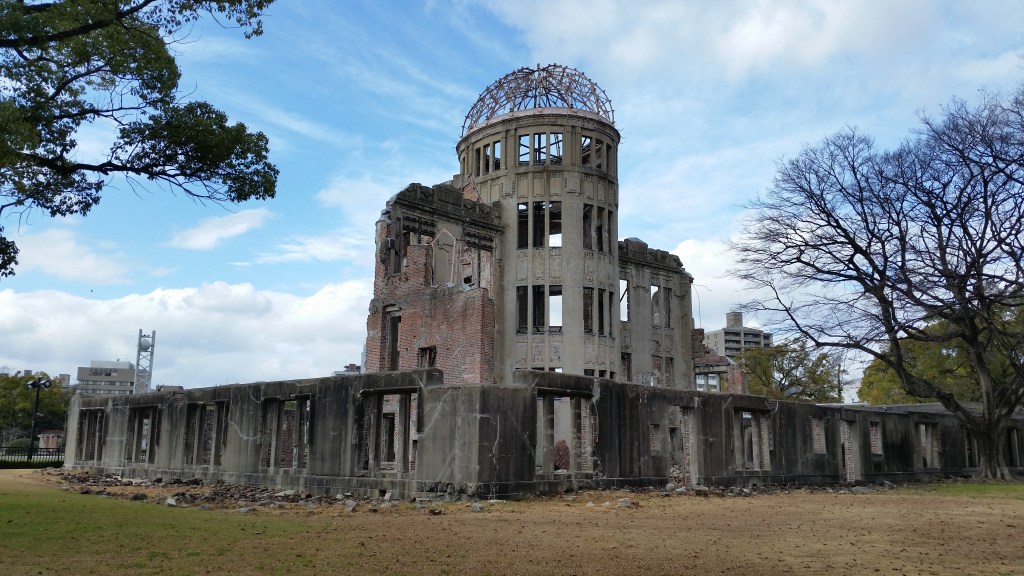
My dead grandfather experienced the atomic bombs and always prayed for the family he lost 1945 in Nagasaki. He hated the Americans for using the atomic bomb and never returned home afterwards. In general, our generation feels to be the victim in the war, not the aggressor. They should inform themselves better.
In Nagasaki and Hiroshima is a museum to tell what happened to the people effected by the atomic bombs. The whole museum is from the victim’s perspective and does not say much about the causes of the bomb. Compare to Germany I believe Japanese people feel less guilt about World War II.”
“What do you want to do in the future?”
“I need or want to get money to be able to do a master of culture studies in Germany. Especially I am interested in North America studies in Marburg, because I can study in English. Therefore, I have to go for jobhunting soon. If I could get a scholarship this would not be necessary. I basically need by law all the money I need for studies, 800 Euro a month, before I even come to Germany. This money I have to submit and afterwards I receive each month of studying 800 Euro from the “Sparkonto”. It will take some time to save the money but I really like to stay in Germany. For me it feels like a more open-minded society rather than the Japanese way of harmony, I have some negative thoughts about.”
“What is the most important thing in life?”
“To improve your time. Try to achieve something more than you can do. I tried to speak English when I could not speak it. I failed at AIU three times and here I am. I studied at a place where I could not study. – But do not die from stress! Dying from stress happens often in Japan. We have also an own word for it:
かろうし=karoshi=ka (too much), rou (work), shi (death).
The body dies if you do too much. Do not do too much!”
[1] Kanji: Mostly Chinese symbols: one symbol has often more than one meaning or pronunciation. Around 2.000 Kanji are used in daily life.
[2] Hirigana: Main alphabet with 46 characters.
[3] Katakana: Alphabet with 46 characters for foreign names and animal sounds.
[4] Edo period: 1603-1868
[5] Something like german Abitur.




 martinaroundtheworld